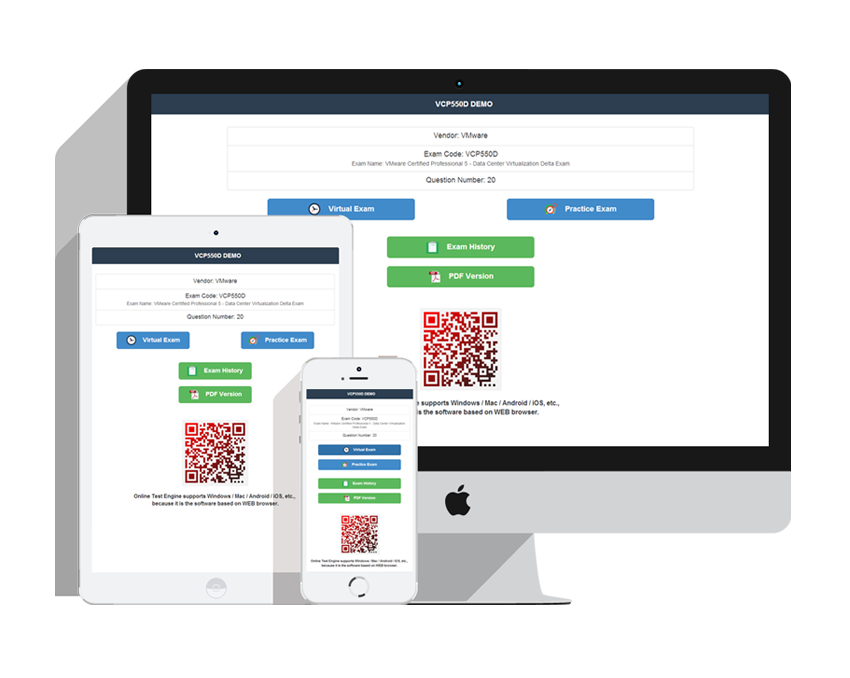
Free Demo


Why you choose VCE4Dumps
First, it is professional. L6M3 exam dumps vce and L6M3 dumps pdf are created by our IT workers who are specialized in the study of real L6M3 test dumps for many years and they check the updating of L6M3 vce dumps everyday to make sure the valid of L6M3 dumps latest, so you can rest assure of the accuracy of our L6M3 vce dumps. The L6M3 vce files of our VCE4Dumps contain questions and correct answers and detailed answer explanations and analysis, which apply to any level of candidates. You will pass the test with high rate If you practice the L6M3 dumps latest seriously and skillfully.
Second, the pass rate is high. May be you are still wonder how to choose, we can show you the date of our pass rate in recent years. The L6M3 exam dumps vce helped more than 100000+ candidates to get the certification and the pass rate is up to 79%. Many customers of VCE4Dumps reflected that our L6M3 vce dumps have 80% similarity to the real L6M3 test dumps. So if you prepare the L6M3 dumps pdf and L6M3 dumps latest seriously and remember the key points of L6M3 test dumps, your pass rate will reach to 80%. So you need to pay much attention to the L6M3 exam dumps vce before test.
Third, it is convenient. Online test engine is only service you can enjoy from our website. It is a simulation of formal test and you can feel the atmosphere of real test. What's more, it allows you to practice the L6M3 dumps pdf in any electronic equipments. If you open it with internet, you can do the L6M3 vce files anywhere. When you are waiting people or taking a bus, you can remember or practice the L6M3 vce files without any limitation.
The service of VCE4Dumps
First, you can download the trial of L6M3 free vce before you buy.
Second, you will be allowed to free updating the L6M3 exam dumps vce one-year after you become a member of us.
Third, we offer 24/7 customer assisting to support if you have any problems about the downloading or purchasing the L6M3 vce dumps.
Forth, we adhere to the principle of No help, Full refund. The money will be full refund if you got a bad result with our L6M3 test dumps.
CIPS L6M3 Exam Syllabus Topics:
| Topic | Details |
|---|---|
| Topic 1 |
|
| Topic 2 |
|
| Topic 3 |
|
| Topic 4 |
|
Do you want to enter into the big international companies? Do you want to meet influential people and extraordinary people of IT field? Do you want to make some achievements in your career? Getting the L6M3 certification may be the first step for you. As the major exam of CIPS, CIPS are recognized by most companies and it proves your IT ability. But the problem is how to get CIPS certification quickly. It will be twice as much as can be accomplished with half of effort with a good helper. VCE4Dumps will be a good helper in the course of preparing your L6M3 test dumps. You just need to spend your spare time to practice the L6M3 vce files and L6M3 test dumps, the test wll be easy for you.

CIPS Global Strategic Supply Chain Management Sample Questions:
What is meant by strategic alignment? How can a company ensure strategic alignment and what are the advantages of this? Describe 3 reasons why a company may find it difficult to become strategically aligned.
Reveal Solution Discussion 0Correct Answer:
See the Explanation for complete answer.
Explanation:
Strategic alignmentrefers to the process of ensuring that all functions, resources, and activities within an organisation arecoordinated and directed toward achieving the overarching corporate objectives.
In a supply chain context, it means aligning procurement, logistics, operations, marketing, and finance with the organisation's long-term goals and competitive strategy - whether that is cost leadership, differentiation, or innovation.
Effective strategic alignment ensures that every decision and process contributes to the same strategic purpose, avoiding internal conflict, duplication, or inefficiency.
1. Meaning of Strategic Alignment
At its core, strategic alignment ensures that:
* Thecorporate strategy(vision, mission, and long-term goals) cascades down throughfunctional strategies(supply chain, procurement, operations, HR, etc.).
* Every department and employee works in a way thatsupports enterprise-wide objectives.
* Resource allocation, key performance indicators (KPIs), and performance measures are consistent with the organisation's priorities.
Example:
If a company's corporate goal is"to achieve sustainable growth through innovation,"its procurement and supply chain functions must align by sourcing ethically, supporting innovative suppliers, and adopting sustainable logistics solutions - not merely focusing on short-term cost savings.
2. How a Company Can Ensure Strategic Alignment
A company can achieve strategic alignment through several key approaches:
(i) Cascading Strategic Objectives
Corporate objectives must be translated into clear functional and departmental goals. This ensures that every business unit understands its contribution to the overall mission. For example, a cost-leadership strategy must translate into supply chain objectives such as lean operations, supplier consolidation, and efficient logistics.
(ii) Cross-Functional Collaboration
Strategic alignment requires open communication and coordination across departments. Supply chain, marketing, finance, and operations must share information and make joint decisions to avoid siloed behaviour.
Mechanisms such as cross-functional teams, strategic steering committees, and integrated planning systems facilitate this alignment.
(iii) Consistent Performance Measurement
KPIs should be aligned across the organisation. For example, procurement savings, service levels, and sustainability metrics should directly support corporate profitability, customer satisfaction, and ESG goals.
(iv) Leadership and Vision Communication
Senior management must articulate a clear vision and reinforce it through culture, values, and consistent messaging. Leadership commitment ensures that employees at all levels understand and support the strategic direction.
(v) Integrated Planning and Technology
Enterprise Resource Planning (ERP) systems, balanced scorecards, and strategic dashboards help align decisions by providing shared visibility of goals, performance, and data across all business functions.
3. Advantages of Strategic Alignment
(i) Organisational Cohesion and Clarity of Purpose
Strategic alignment ensures that all departments work toward the same objectives, improving cooperation and reducing internal conflict. It creates unity of direction and purpose.
(ii) Improved Performance and Efficiency
Aligned processes and goals eliminate duplication, reduce waste, and ensure that resources are focused on value-adding activities. This enhances productivity and cost-effectiveness.
(iii) Better Strategic Execution
Alignment ensures that strategies are implemented consistently across functions. Execution gaps - common when departments pursue conflicting objectives - are reduced.
(iv) Enhanced Responsiveness and Agility
When all functions share a common strategic framework, the organisation can adapt quickly to external changes (such as market shifts or supply chain disruptions) without losing focus on its strategic priorities.
(v) Strengthened Competitive Advantage
A well-aligned organisation is better positioned to deliver on its value proposition - whether through superior cost efficiency, innovation, or customer service - thereby sustaining long-term competitiveness.
4. Reasons Why a Company May Find It Difficult to Achieve Strategic Alignment Despite its benefits, many organisations struggle to become strategically aligned due to internal and external barriers. Three key reasons include:
(i) Organisational Silos and Conflicting Objectives
Departments often operate independently, with their own targets and KPIs that conflict with overall corporate strategy. For example, procurement might focus on lowest cost while marketing emphasises premium quality
- resulting in misalignment. Overcoming functional silos requires strong governance and shared accountability.
(ii) Poor Communication and Lack of Strategic Clarity
If the corporate strategy is not clearly communicated or understood across all levels, employees may pursue short-term or localised objectives. Misinterpretation of strategic intent often leads to inconsistent decision- making and wasted effort.
(iii) Rapid Environmental Change
External changes - such as technological disruption, regulation, or shifting market dynamics - can make it difficult to maintain alignment. Strategies may become outdated faster than organisational structures can adapt, resulting in misalignment between planned goals and operational realities.
(iv) Cultural Resistance to Change(additional relevant point)
Employees and managers may resist changes that threaten established routines or power structures. Without a culture that supports strategic flexibility and innovation, alignment efforts may fail.
5. Summary
In summary,strategic alignmentensures that all parts of the organisation - from top-level strategy to day-to- day operations - work cohesively toward the same corporate goals.
It can be achieved throughclear communication, cross-functional collaboration, aligned KPIs, and strong leadership.
The advantages include improved efficiency, stronger performance, and a sustained competitive edge.
However, alignment may be difficult to achieve due tosiloed functions, poor communication, and environmental change.
A strategically aligned organisation is one where every decision - in procurement, operations, and supply chain - directly supports the overall mission and vision, driving both profitability and long-term resilience.
What are the advantages and disadvantages to the fragmentation of the supply chain?
Reveal Solution Discussion 0Correct Answer:
See the Explanation for complete answer.
Explanation:
Fragmentation of the supply chainrefers to the process where supply chain activities - such as sourcing, manufacturing, logistics, and distribution - aredispersed across multiple locations, suppliers, and partners
, often on a global scale.
Rather than being concentrated within one integrated organisation or region, fragmented supply chains rely on specialised external entitiesandgeographically dispersed networksto perform different functions.
While this fragmentation can offer strategic and operational benefits, it also introduces complexity, risk, and coordination challenges that must be carefully managed.
1. Meaning and Context of Supply Chain Fragmentation
Globalisation, technological development, and cost pressures have encouraged companies tooutsourceand offshoremany supply chain functions.
For example:
* Components may be produced in China, assembled in Vietnam, and distributed from the Netherlands.
* Logistics may be managed by third-party providers (3PLs).
* Customer service may be handled through separate regional call centres.
Thisfragmented modelallows firms to take advantage of global specialisation, lower costs, and proximity to markets - but at the expense of increased coordination and risk.
2. Advantages of Supply Chain Fragmentation
Fragmentation offers several strategic benefits that can improve competitiveness, flexibility, and access to new capabilities.
(i) Cost Efficiency and Access to Global Resources
Description:
Fragmentation allows organisations to source materials, labour, and services from regions where they are most cost-effective.
Example:
A clothing retailer may source fabric from India, manufacture garments in Bangladesh, and ship products to the UK - taking advantage of lower labour and production costs.
Advantages:
* Reduces overall production and logistics costs.
* Increases profit margins and price competitiveness.
* Enables firms to focus on core competencies (e.g., design, marketing).
(ii) Specialisation and Expertise
Description:
By outsourcing certain activities to specialised suppliers or service providers, companies gain access to expertise and advanced capabilitiesthat might be too costly to develop internally.
Example:
Outsourcing logistics to global 3PLs such as DHL or Maersk allows firms to benefit from advanced distribution networks, technology, and efficiency.
Advantages:
* Improves quality and service reliability.
* Enables innovation through access to specialised knowledge.
* Supports continuous improvement through competitive outsourcing markets.
(iii) Flexibility and Responsiveness to Market Changes
Description:
A fragmented supply chain enables companies to adapt quickly to changes in global demand, technology, or political conditions byshifting suppliers or production locations.
Example:
Electronics firms often shift production between Southeast Asian countries in response to tariff changes or labour shortages.
Advantages:
* Enhances agility and responsiveness to external shocks.
* Supports rapid scaling up or down based on market conditions.
* Diversifies supply base, reducing dependency on single sources.
(iv) Access to Global Markets and Customer Proximity
Description:
Operating through multiple global supply chain nodes allows firms to be closer to customers, reducing delivery times and improving service.
Example:
A multinational like Unilever locates distribution centres near regional markets to meet demand more effectively.
Advantages:
* Improves delivery speed and customer satisfaction.
* Reduces transportation time for regional markets.
* Supports localisation and customisation of products.
3. Disadvantages of Supply Chain Fragmentation
Despite its advantages, fragmentation can lead toincreased complexity, coordination challenges, and higher exposure to risk.
These disadvantages can undermine efficiency, visibility, and resilience if not managed effectively.
(i) Increased Complexity and Coordination Challenges
Description:
The more dispersed the supply chain, the more difficult it becomes to manage information, processes, and relationships.
Multiple suppliers, logistics providers, and regulations create coordination difficulties.
Example:
A global manufacturer sourcing components from five countries must coordinate lead times, customs clearance, and compliance with diverse standards.
Disadvantages:
* Increased administrative burden and management costs.
* Communication delays and data inconsistency.
* Risk of misalignment between supply chain partners.
(ii) Higher Supply Chain Risk and Vulnerability
Description:
Fragmented supply chains aremore exposed to disruptionscaused by geopolitical instability, transportation delays, or supplier failures.
With multiple cross-border links, a disruption in one part of the network can quickly cascade throughout the system.
Example:
The COVID-19 pandemic exposed vulnerabilities in global supply chains reliant on single regions for key materials (e.g., China for electronics).
Disadvantages:
* Supply interruptions and production delays.
* Increased cost of risk management and contingency planning.
* Reduced resilience and operational stability.
(iii) Loss of Control and Visibility
Description:
Fragmentation leads toreduced oversightover suppliers and processes, especially beyond Tier 1 suppliers.
This can make it difficult to monitor performance, quality, or ethical standards.
Example:
Fashion retailers such as Boohoo and Nike have faced reputational damage due to unethical labour practices in outsourced factories.
Disadvantages:
* Reduced transparency and traceability.
* Quality and compliance issues.
* Reputational risk due to supplier misconduct.
(iv) Environmental and Sustainability Impacts
Description:
Global fragmentation increases transport distances, emissions, and resource consumption.
It also complicates sustainability tracking across multiple suppliers.
Example:
Shipping goods between continents increases the carbon footprint and undermines sustainability targets.
Disadvantages:
* Increased carbon emissions and environmental impact.
* Difficulty ensuring sustainable and ethical practices throughout the chain.
* Pressure from regulators, consumers, and investors to demonstrate ESG compliance.
4. Evaluation - Balancing Global Fragmentation and Integration
The impact of fragmentation depends on how effectively it ismanaged and integrated.
Modern supply chains increasingly adoptdigital integration technologies(e.g., ERP, blockchain, IoT) to mitigate fragmentation risks by improving visibility and coordination.
Key Strategies to Manage Fragmentation:
* Supply chain visibility toolsfor tracking goods and performance in real time.
* Collaborative planning and data sharingwith key suppliers.
* Regionalisation or "nearshoring"to balance global reach with risk reduction.
* Sustainability monitoring systemsto ensure compliance and transparency.
Many organisations are now moving toward a"glocal" (global + local)strategy - maintaining global reach while building local responsiveness and control.
5. Summary of Advantages and Disadvantages
Advantages
Disadvantages
Lower production and sourcing costs
Increased coordination and communication complexity
Access to global expertise and technology
Higher exposure to disruption and geopolitical risks
Greater flexibility and scalability
Reduced control and visibility across the chain
Proximity to markets and customers
Environmental and ethical compliance challenges
6. Summary
In summary,fragmentation of the supply chainenables organisations to leverageglobal efficiency, specialisation, and market access, but it also introducescomplexity, risk, and reduced control.
To gain the advantages of fragmentation while minimising its disadvantages, organisations must invest in:
* Digital integrationfor visibility and coordination,
* Robust risk managementand supplier governance, and
* Sustainable sourcingpractices to maintain ethical and environmental responsibility.
When managed strategically, fragmentation can be transformed from a source of vulnerability into a source of competitive advantage, combining global efficiency with operational resilience.
Describe THREE ways an organisation can match supply and demand.
Reveal Solution Discussion 0Correct Answer:
See the Explanation for complete answer.
Explanation:
Matchingsupply and demandis one of the core challenges in supply chain management. It refers to the process ofaligning production, inventory, and logistics capacity with customer demandto ensure that the right products are available at the right time - without creating shortages, excess stock, or unnecessary costs.
Effective alignment of supply and demand improvesservice levels, reduces waste, enhances profitability, and contributes to a moreresilient and responsive supply chain.
Organisations can use various strategies to achieve this balance. The three most effective approaches are demand forecasting and planning,flexible supply and capacity management, andinventory management and buffering.
1. Demand Forecasting and Planning
Description:
Demand forecasting is the process of predicting future customer demand using historical data, market trends, and analytical models. It enables an organisation to plan production, procurement, and distribution proactively rather than reactively.
How It Helps Match Supply and Demand:
* Provides a forward-looking view of customer needs, helping ensure that production and inventory levels align with expected sales.
* Reduces the risk ofstockoutsoroverproduction.
* Supports cross-functional planning across sales, marketing, operations, and procurement.
Methods Used:
* Quantitative Forecasting:Uses statistical techniques (e.g., time series, regression, moving averages).
* Qualitative Forecasting:Uses expert judgement, market intelligence, and customer feedback.
* Collaborative Planning, Forecasting and Replenishment (CPFR):A joint approach with key suppliers and customers to share information and coordinate replenishment.
Example:
A toy retailer analyses sales data from the previous five Christmas seasons to forecast seasonal peaks, allowing the company to plan production and logistics capacity in advance.
Elimination of Mismatch:
Accurate forecasting ensures supply chain decisions are driven by real demand patterns, improving service levels and reducing costs associated with excess stock or missed sales opportunities.
2. Flexible Supply and Capacity Management
Description:
Flexible supply and capacity management enables an organisation toadjust its production, labour, and sourcing levelsquickly in response to fluctuations in demand.
This approach focuses onbuilding agilityinto the supply chain so that it can scale up or down efficiently.
How It Helps Match Supply and Demand:
* Allows quick response to short-term demand surges or declines.
* Avoids bottlenecks and underutilisation by balancing resources with actual needs.
* Reduces the risk of carrying unused capacity or inventory.
Techniques Used:
* Flexible Manufacturing Systems (FMS):Modular production setups that can adapt to different product types and volumes.
* Dual Sourcing Strategies:Maintaining multiple suppliers to enable rapid switching when demand changes.
* Outsourcing and Subcontracting:Engaging third-party partners to expand capacity temporarily.
* Workforce Flexibility:Using part-time or contract labour during peak periods.
Example:
A packaging company increases production capacity during holiday seasons by using contract manufacturers, ensuring that supply matches temporary spikes in demand.
Elimination of Mismatch:
By incorporating flexibility into its supply network, an organisation can manage variability efficiently, maintaining high service levels without the cost of permanent overcapacity.
3. Inventory Management and Buffering
Description:
Inventory acts as abufferbetween fluctuating supply and demand. Effective inventory management ensures that stock levels are optimised - sufficient to meet demand but not excessive to the point of increasing costs or obsolescence.
How It Helps Match Supply and Demand:
* Provides a cushion against variability in demand, lead times, or supply disruptions.
* Enables consistent product availability even when production or delivery is delayed.
* Balances the trade-off between holding costs and service level performance.
Techniques Used:
* Safety Stock:Holding a reserve inventory to protect against demand or supply uncertainty.
* Reorder Point Systems:Automatic replenishment based on real-time stock levels and demand rates.
* ABC Inventory Classification:Focusing management attention on high-value or high-impact items.
* Just-in-Time (JIT) and Kanban:Minimising stock while ensuring flow through controlled replenishment triggers.
Example:
A stationery supplier holds additional inventory of high-demand items like printer paper during the school year while maintaining leaner stock levels during quieter periods.
Elimination of Mismatch:
Properly balanced inventory reduces bothstockouts(lost sales) andoverstocking(waste and capital lock-up), maintaining alignment between supply and customer demand across varying conditions.
4. Integrated Planning and Collaboration (Supporting Element)
Although the question asks for three methods, it is important to note that these approaches are most effective when combined throughSales and Operations Planning (S&OP)- a structured, cross-functional process that integrates demand forecasting, supply capacity planning, and inventory management.
This ensures that all departments within the organisation are working toward a single, aligned plan for balancing supply and demand.
5. Summary
In summary, matching supply and demand requires astrategic, data-driven, and flexible approach.
The three key methods are:
* Demand Forecasting and Planning- to anticipate customer needs accurately.
* Flexible Supply and Capacity Management- to adjust resources in response to demand variation.
* Inventory Management and Buffering- to balance short-term mismatches and ensure continuity of service.
When integrated within a structured S&OP framework, these methods enable organisations to maintain operational efficiency, customer satisfaction, and financial stability, even in volatile market environments.
XYZ Ltd is a large sporting retailer selling items such as clothing, bikes and sports equipment. They have stores in the UK and France. Helen is the CEO and is looking at the product and service mix on offer at the company in order to plan for the future. What is this and how should Helen approach an analysis of the product and service mix offered by the company? How will this affect the way she decides the company's corporate strategy?
Reveal Solution Discussion 0Correct Answer:
See the Explanation for complete answer.
Explanation:
Theproduct and service mixrefers to therange, diversity, and balance of products and servicesthat an organisation offers to its customers. For a large retailer like XYZ Ltd, it includes not only the physical goods
- such as sports clothing, bicycles, and equipment - but also associated services such as repairs, maintenance, warranties, online ordering, and customer support.
Analysing the product and service mix helps management understand which offerings contribute most to profitability, growth, and customer satisfaction, and which may need improvement, repositioning, or withdrawal.
This analysis forms the foundation for shaping the organisation'scorporate strategy, as it reveals where the company's strengths, risks, and opportunities lie across different product and service categories.
1. Understanding the Product and Service Mix
Theproduct mixrepresents the full assortment of products the company offers, defined by four key dimensions:
* Width:The number of product lines (e.g., clothing, bikes, footwear, accessories).
* Length:The total number of products within each line (e.g., mountain bikes, road bikes, e-bikes).
* Depth:The variety within a product line (e.g., different brands, sizes, colours, price ranges).
* Consistency:How closely related the product lines are in terms of use, production, and target market.
Theservice mixincludes any intangible offerings that support or enhance the product experience - such as after-sales service, product customization, online chat support, or home delivery. For XYZ Ltd, this may include bicycle repair workshops, fitness advice, and loyalty programmes.
A balanced mix allows the company to meet diverse customer needs while maintaining profitability and brand consistency.
2. How Helen Should Approach an Analysis of the Product and Service Mix Helen, as CEO, should take a structured and data-driven approach to analysing XYZ Ltd's current product and service portfolio. The following analytical tools and methods are useful:
(i) Portfolio Analysis - The BCG Matrix
TheBoston Consulting Group (BCG) Matrixis a widely used tool that classifies products or services according tomarket growth rateandmarket share, helping to guide resource allocation.
Category
Description
Example for XYZ Ltd
Strategic Action
Stars
High growth, high market share
E-bikes, performance apparel
Invest to sustain leadership
Cash Cows
Low growth, high market share
Traditional bicycles, core fitness gear
Maintain efficiency, generate profit
Question Marks
High growth, low market share
Smart fitness wearables
Evaluate potential; invest selectively
Dogs
Low growth, low market share
Outdated product lines
Rationalise or discontinue
This analysis helps Helen determine which product lines to grow, maintain, or phase out.
(ii) Product Life Cycle (PLC) Analysis
Each product or service progresses throughintroduction, growth, maturity, and declinestages.
Understanding where each offering sits on the life cycle helps in forecasting demand, managing inventory, and planning innovation or replacement.
* For instance,e-bikesmay be in thegrowthphase, requiring investment in supply and marketing.
* Traditional sports equipmentmight be inmaturity, needing efficiency and differentiation.
* Older models of clothing linesmay be indecline, requiring markdowns or withdrawal.
(iii) Profitability and Margin Analysis
Helen should examine each product and service category'ssales revenue, cost structure, and contribution margin.
High-turnover but low-margin items (e.g., sports accessories) may support traffic but reduce profitability, whereas premium services (e.g., bike repairs or loyalty memberships) could generate higher margins and customer retention.
(iv) Customer and Market Segmentation Analysis
Understanding which customer groups purchase which products or services - for example,casual consumers
,serious athletes, orparents buying children's equipment- enables more targeted offerings and efficient marketing spend.
This analysis may differ between the UK and French markets due to cultural and demographic variations.
(v) Competitive Benchmarking
Helen should also compare XYZ Ltd's product and service range against leading competitors to identify differentiation opportunities, pricing gaps, or innovation potential.
3. How the Product and Service Mix Analysis Affects Corporate Strategy
The findings from this analysis will directly influence XYZ Ltd'scorporate and business strategyin several key ways:
(i) Strategic Focus and Resource Allocation
The company can decide which product lines or services are strategic priorities - for example, focusing investment on high-growth categories such as e-bikes and reducing emphasis on low-margin items. This ensures resources are deployed where they generate the greatest return.
(ii) Market Positioning and Differentiation
The analysis helps define how XYZ Ltd positions itself in the market - e.g., as a premium sports retailer, an affordable brand, or an eco-conscious supplier. The service mix (like repair workshops or sustainable sourcing) can reinforce that brand image.
(iii) Innovation and Product Development Strategy
Insights from the mix analysis can guide R&D or supplier collaboration efforts - for instance, introducing new eco-friendly clothing or smart fitness technology.
(iv) Supply Chain Strategy Alignment
Changes to the product mix influence sourcing, logistics, and inventory strategies. For instance, increasing e- bike offerings may require partnerships with new component suppliers, while expanding services might need new in-store capabilities or digital platforms.
(v) Geographic Strategy and Market Expansion
Comparing performance between the UK and France may reveal opportunities for regional adaptation or global standardisation, influencing whether the corporate strategy adopts alocalisationorglobal integration approach.
4. Strategic Implications
Helen's analysis of the product and service mix will form a key input intocorporate strategy formulation, as it identifies where the company's future growth, profitability, and differentiation lie.
It will determine:
* Which markets to expand or exit.
* How to balance products versus services.
* Where to invest in innovation or partnerships.
* How to align the company's supply chain and marketing functions with strategic priorities.
5. Summary
In summary, theproduct and service mixrepresents the total range of offerings that define XYZ Ltd's value proposition to its customers.
By systematically analysing this mix - using tools such as theBCG Matrix,Product Life Cycle analysis, andprofitability evaluation- Helen can identify which areas to grow, sustain, or divest.
This analysis directly shapes the company'scorporate strategy, guiding decisions on investment, market positioning, innovation, and supply chain alignment.
A well-balanced and strategically managed product and service mix ensures that XYZ Ltd remains competitive, customer-focused, and financially robustin both its domestic and international markets.
What is Enterprise Profit Optimisation? What are the advantages and disadvantages of using this?
Reveal Solution Discussion 0Correct Answer:
See the Explanation for complete answer.
Explanation:
Enterprise Profit Optimisation (EPO)is astrategic management approachthat focuses on maximising overall organisational profitability by optimising all interdependent functions across the enterprise - including procurement, supply chain, production, marketing, and finance - rather than focusing on isolated departmental performance.
It seeks to createtotal business valueby aligning every decision and resource allocation with the goal of improvingenterprise-wide profitrather than short-term cost reduction or functional efficiency.
In essence, EPO enables an organisation to make integrated decisions that balance cost, revenue, risk, and service levels across the entire value chain.
1. Definition and Concept
EPO extends traditional profit management beyond the boundaries of individual departments.
It involves:
* Holistic decision-making:Considering how procurement, manufacturing, logistics, and sales collectively affect total profit.
* Use of advanced analytics:Employing data-driven modelling to evaluate trade-offs between cost, price, service, and risk.
* Cross-functional collaboration:Breaking down silos to ensure decisions are aligned with enterprise objectives.
* Dynamic optimisation:Continuously adjusting operations in response to changing market, cost, and demand conditions.
For example, in a manufacturing company, procurement may identify cheaper materials; however, if these materials reduce product quality and affect sales, total profit declines. EPO ensures such decisions are evaluated from a total-enterprise perspective rather than a single functional viewpoint.
2. Advantages of Enterprise Profit Optimisation
(i) Enhanced Total Profitability
By integrating decisions across all business functions, EPO maximises enterprise-level profit rather than sub- optimising within departments. For instance, supply chain cost savings are weighed against revenue impacts, ensuring the most profitable overall outcome.
(ii) Improved Strategic Alignment
EPO aligns functional goals with corporate strategy. Departments work collaboratively toward shared profitability objectives rather than conflicting individual KPIs (e.g., procurement focusing only on cost- cutting while sales focus on revenue growth).
(iii) Data-Driven Decision Making
Through advanced analytics, simulation, and predictive modelling, EPO provides better insight into the financial implications of supply chain and operational decisions. This supports evidence-based, strategic decisions across the enterprise.
(iv) Greater Responsiveness and Agility
EPO enables rapid, informed responses to market fluctuations, demand changes, or cost variations. Decisions can be adjusted dynamically to maintain profitability in volatile environments.
(v) Cross-Functional Collaboration and Efficiency
By breaking down silos, EPO encourages joint decision-making across procurement, production, logistics, and sales. This leads to improved communication, efficiency, and shared accountability.
(vi) Competitive Advantage
Organisations implementing EPO effectively can outperform competitors by optimising total value, reducing waste, and balancing customer satisfaction with profitability.
3. Disadvantages and Challenges of Enterprise Profit Optimisation
(i) Complexity of Implementation
EPO requires advanced analytical tools, integrated data systems, and strong cross-functional collaboration.
For large, global organisations, implementing such integration can be resource-intensive and complex.
(ii) High Cost of Technology and Data Infrastructure
Effective EPO depends on real-time data and sophisticated modelling systems, which require significant investment in IT infrastructure, software, and skilled personnel.
(iii) Cultural and Organisational Resistance
Departments accustomed to working independently may resist change. Moving from functional metrics (like cost reduction) to enterprise-wide profit measures can encounter internal opposition.
(iv) Risk of Over-Reliance on Quantitative Models
EPO often relies heavily on data analytics. However, models may not capture qualitative factors such as supplier relationships, brand perception, or innovation potential, leading to potentially suboptimal decisions if used in isolation.
(v) Data Quality and Integration Issues
For EPO to be effective, accurate and consistent data must flow seamlessly across departments and systems.
Poor data integrity or fragmented systems can undermine the accuracy of profit optimisation analysis.
4. Strategic Implications
At a strategic level, Enterprise Profit Optimisation shifts the focus of supply chain and procurement functions fromcost savingstovalue creation. It encourages holistic trade-off decisions that consider revenue growth, customer satisfaction, and risk mitigation.
For multinational organisations, it enables decision-making that balances global efficiency with local responsiveness - ensuring sustainable profitability across the enterprise.
Summary
In summary,Enterprise Profit Optimisationis a strategic framework that maximises organisational profitability through integrated, data-driven decision-making across all functions.
Itsadvantagesinclude greater total profitability, alignment with corporate strategy, and enhanced agility, while itsdisadvantagesrelate to complexity, high implementation costs, and cultural resistance.
When implemented effectively, EPO transforms the supply chain from a cost centre into astrategic profit generator, driving sustainable competitive advantage for the organisation.
Viewing page 1 out of 9 pages.
Viewing questions 1-5 out of 41 questions.